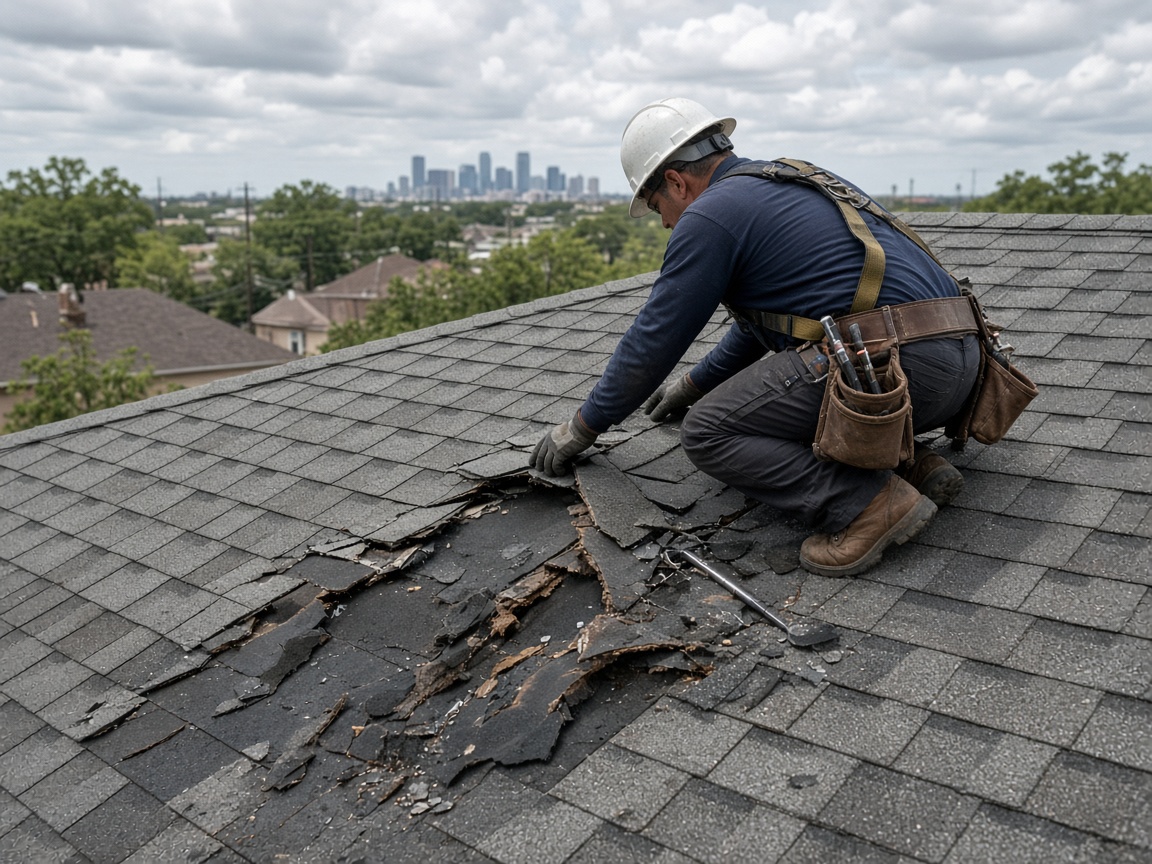
Dallas experiences frequent thunderstorms that produce high winds, hail and sudden downpours, especially during spring and early summer. These events often affect older housing stock in neighborhoods such as East Dallas and Bishop Arts District, where asphalt shingles on homes built decades ago can lose granules or develop punctures that allow water intrusion at seams and flashing points. Independent local providers evaluate underlayment condition and deck integrity after storms because hidden moisture can lead to rot if not addressed before the next rain cycle.
In Uptown Dallas and Lake Highlands, tree cover and proximity to open areas increase the chance of branch impact or wind uplift on roof edges. Providers check for lifted shingles along eaves and ridges, then inspect attic spaces for daylight or insulation damage that signals compromised barriers. Concrete tile roofs common in some North Dallas sections require different assessment methods, as cracks from hail may not show immediate leaks but can worsen with temperature swings between hot days and cooler nights.
Repair work in Downtown Dallas and Deep Ellum often involves coordinating around historic building restrictions and tight lot lines that limit staging areas. Providers focus on matching existing materials to maintain drainage patterns around chimneys and skylights, since altered slopes can direct water toward interior walls during subsequent storms. Proper ventilation checks are also part of the process because Dallas humidity can trap moisture under repaired sections if airflow is restricted.
After any storm, independent local providers document visible damage with photos and measurements before beginning work to align with local building expectations in Dallas County. This documentation helps homeowners understand which sections need targeted fixes versus broader attention, particularly on homes where multiple layers of roofing already exist.
Technician insight
In Dallas, the thing that catches most people out with Storm Damage Roof Repair is how quickly wind-driven rain finds weak spots around older flashing on East Dallas homes; the mild winters mean people often delay checks until the next humid summer storm hits and turns a small puncture into widespread deck damage.
Oak Lawn Hail Impact
A home in Oak Lawn showed several hail dents along the south-facing slope after a spring storm. The provider found crushed granules exposing felt underlayment and minor deck softening near a valley. Targeted shingle replacement and new step flashing were installed to restore the drainage path. No further leaks appeared after the next heavy rain.
How it works
- 1
Initial Assessment Request
Provide details about visible damage and the property location in Dallas so the pros we connect you with can prepare for an on-site visit.
- 2
Provider Matching
We connect you with independent local providers familiar with Dallas neighborhoods and common storm impacts on local housing.
- 3
On-Site Evaluation
The provider inspects the roof, attic and surrounding features to identify all affected areas from wind, hail or water.
- 4
Repair Execution
Targeted repairs address punctures, lifted flashing and compromised underlayment while preserving the rest of the roof where possible.
- 5
Final Walkthrough
The provider reviews completed work with the homeowner to confirm drainage and material integrity around repaired sections.